Giving yourself a few minutes
Sometimes you pull into the driveway and want to let the song finish, but you turn off the car halfway through because there’s too much to do inside. Or you finally get a quiet moment at home, think about sitting down with your coffee, and start unloading the dishwasher instead. You know what you would enjoy. A walk, a shower, ten minutes on the couch with nobody asking you to find something. But wanting that time and letting yourself take it can feel surprisingly far apart.
You tell yourself you’ll sit down once the kitchen is clean, once the clothes are folded, once you’ve gotten ahead of tomorrow. It sounds reasonable until one finished task reveals three more, and the time you wanted for yourself quietly disappears. By the end of the evening, you’ve done a great deal and barely had a moment to enjoy being finished with any of it. That shower has become something to squeeze in before bed, and you’re too tired to read the book you were looking forward to.
It can be uncomfortable to stop while you still have something to give. You might think, I could get one more thing done, and you probably could. But being able to keep going doesn’t mean you have to use every bit of energy you have. If you’re used to anticipating everyone’s needs, being dependable, or making sure things run smoothly, choosing your own comfort can feel almost irresponsible. You sit down, but part of you is still standing in the kitchen, keeping track of what you haven’t done.
Meanwhile, your body has been participating in the whole day. Stress can activate your nervous system’s response to demands, increasing your heart rate and breathing and tightening your muscles. You may not notice how tense you’ve become until you finally stop and realise your shoulders have been keeping your ears company. Giving yourself a pause creates an opportunity to notice that tension, loosen your jaw, and take a few slow, comfortable breaths. Gentle breathing and relaxation practices can support the body’s relaxation response, helping your breathing and heart rate settle. Dinner may still need making, but you might feel a little less wound up while making it.
That doesn’t mean your break needs a technique, a timer, or a successful outcome. You can enjoy the warm water in the shower without turning it into a wellness exercise. You can finish your tea because you like drinking it warm. You don’t have to return noticeably calmer or more productive to prove that those minutes were worth taking. Your own relief is a good enough reason to make room for them.
What that looks like will depend on the day, but it may begin with following through on something you already wanted to do. If there are a few minutes before pickup, you might stay in your parked car and finish the song instead of answering another email. If you have time for a short walk before or after work, you can take it without adding an errand along the way. When you get home and someone is available to take over, you can say, “I’d like fifteen minutes to shower and change before I start dinner,” and then actually take those fifteen minutes.
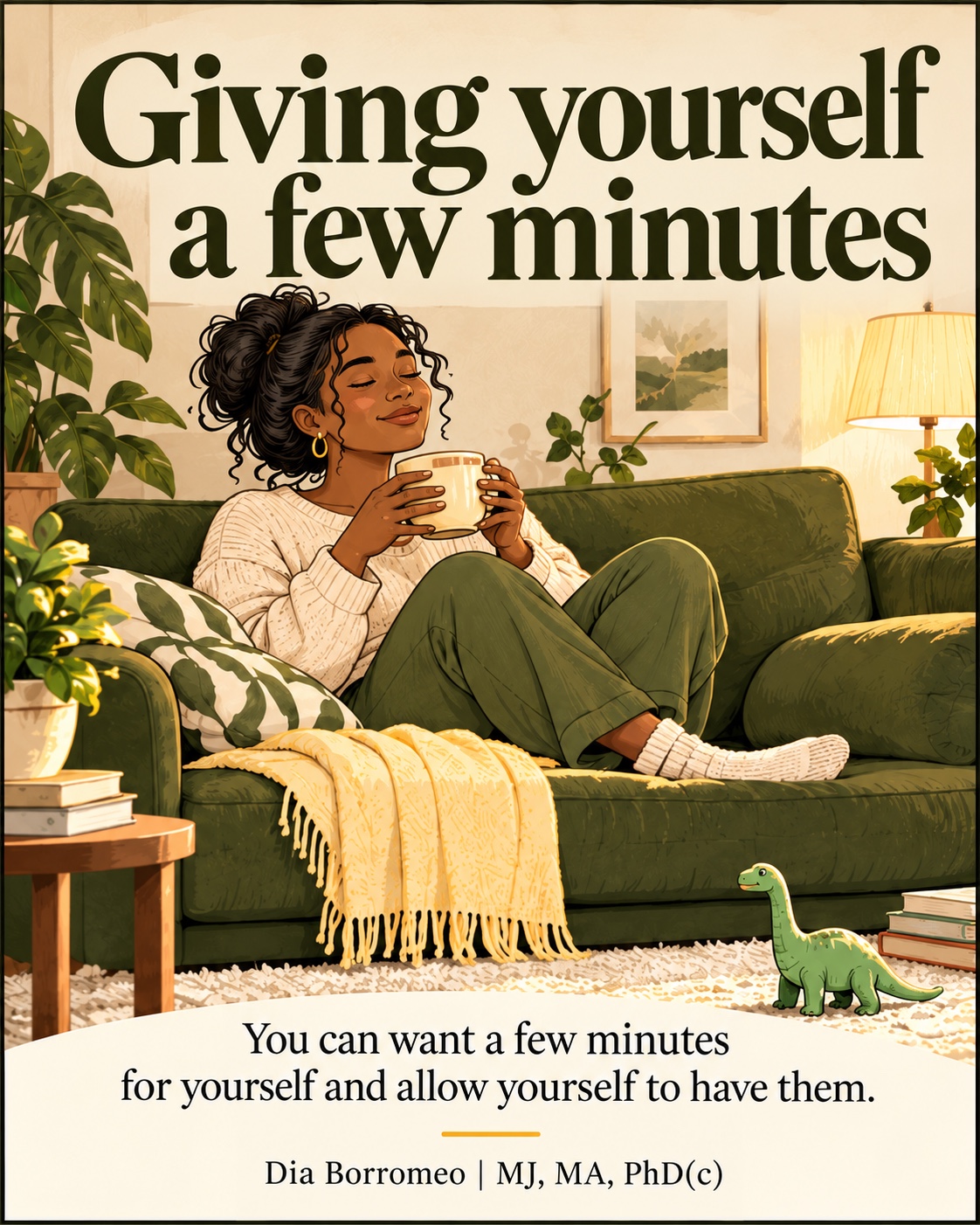
At home with your child, the choice may be to sit beside them while they play instead of cleaning around the game. You might still receive a dinosaur to hold and a detailed explanation of its plans, but you can receive both from the couch. You could settle in together for a familiar show and let dinner be something easy, rather than using every occupied moment to catch up. Later, if bedtime gives you a little space, you can head for the shower before the sink. The dishes will still be available afterward. They’re reliable like that.
Perhaps you would love a quiet coffee before the house wakes up. If you’re getting enough sleep, you can leave the phone alone and enjoy it without planning the entire day. If you’ve been up through the night, the thing you want may be more sleep, and you can let that matter instead. Making time for yourself shouldn’t require borrowing from rest you already need.
The guilt may still show up. You might notice the laundry from where you’re sitting or feel the urge to get up as soon as someone else starts doing something. You don’t have to wait for that feeling to disappear before continuing your break. Sometimes giving yourself permission sounds as ordinary as, “Yes, that needs doing. I’m going to finish my tea first.” Some things genuinely need an immediate response; others can wait without your having to explain just how tired you are.
Of course, there are days when the time genuinely isn’t there, however willing you are to take it. Bedtime stretches on, work runs late, or someone needs close care. Permission alone cannot create dependable help or a lighter workload, and a few quiet minutes cannot make up for ongoing exhaustion. Those needs deserve attention too. But when a small opening does appear, you’re allowed to use it for yourself instead of automatically giving it to the next task.
Tonight, you might notice the moment you think, I’d really like to sit down, and pause before answering yourself with, First, I should… If what comes next can wait, let it. Take the shower while you still have the energy to enjoy it, open the book, or let the song finish. You can want a few minutes for yourself and allow yourself to have them.
“Care tasks are a never-ending list and if you wait until everything is done to rest you will never rest.”
KC Davis, Struggle Care
Sources & further reading
National Center for Complementary and Integrative Health: Stress
What came up for you?
Leave a question or share a thought about this article. Your message goes privately to Dia.
Share a question or comment →